
9 Novo Alternatives Every Startup Should Know in 2026


Novo has earned a loyal following among freelancers and small business owners for its fee-free checking account, built-in invoicing, and seamless integrations with tools like Shopify, Stripe, and QuickBooks. For businesses that need a simple, no-cost digital banking account, it’s a solid starting point.
However, as your business grows, some notable gaps in the Novo platform can start to feel limiting. Novo checking accounts earn no interest on deposits, the platform offers no traditional line of credit or term loan products, and there is no option to make cash deposits at retail locations or ATMs. For business owners who want their idle cash to work harder, need access to financing, or handle any amount of physical currency, these gaps can become deal-breakers.
This guide compares nine alternatives to Novo, including Bluevine, Mercury, Relay, and others, so you can find the platform that matches where your business is headed. For a broader look at how Bluevine compares to other platforms, we have a dedicated overview as well.
Highlights
- Novo does not pay interest on deposits. Your checking balance earns 0% APY, which means idle cash loses purchasing power over time.
- No traditional lending products. Novo offers merchant cash advances through Novo Funding, but does not provide a line of credit or term loan. Businesses that need flexible financing may find this limiting.
- Unlike Novo, Bluevine offers a high-APY business checking account with rates up to 3.0% APY1, FDIC insurance up to $3 million through Coastal Community Bank, Member FDIC and partner banks2, and access to apply for a line of credit up to $250,000.3
- Cash-handling businesses take note: Novo does not accept cash deposits. Several alternatives on this list, including Bluevine and NorthOne, offer cash deposit access through retail networks.
- The right pick comes down to what matters most to your business: earning yield, accessing credit, managing a growing team, or simplifying tax season.
Why consider an alternative to Novo?
Novo is a strong fit for freelancers and solopreneurs who prioritize a clean interface, zero fees, and tight integrations with e-commerce and accounting tools. Its unlimited invoicing, ATM fee refunds (up to $7 per month), and fast onboarding process make it easy to get started. For a very small business that deals entirely in digital payments and does not need to earn interest, Novo can be an effective day-to-day banking tool.
That said, several limitations may prompt growing businesses to look elsewhere:
- No interest on deposits. Novo pays 0% APY on all balances. A business holding $50,000 in a Novo account earns nothing, while the same balance in a high-yield business checking account could generate over $1,500 per year.
- Limited lending options. Novo offers merchant cash advances (up to roughly $75,000) through Novo Funding, but does not provide a traditional line of credit or term loan. Businesses that need revolving credit or larger financing amounts will need to look elsewhere.
- No cash deposit capability. As a fully online platform with no branch network, Novo cannot accept cash deposits. Businesses that receive any physical cash, such as retailers, contractors, or service providers, need a platform with deposit access.
- Basic sub-account functionality. Novo Reserves allows you to create up to 20 Reserve categories within a single checking account. However, these are not separate accounts with their own account numbers and debit cards, which can limit how effectively you organize and delegate finances as your team grows.
Novo vs. Competitors Overview
1. Bluevine
Best for: Small businesses that want to earn interest on checking balances while accessing lending products
Novo vs. Bluevine: While Novo pays 0% interest on deposits, Bluevine offers up to 3.0% APY1 on checking balances and provides access to apply for a line of credit up to $250,0003, so your money earns a return while you focus on growing.
Bluevine is an all-in-one digital banking platform built for sole proprietorships, LLCs, and corporations alike. The platform combines a high-APY business checking account5 with integrated invoicing, bill pay powered by automation, and payment acceptance powered by Stripe6. For business owners who want a single platform to handle both day-to-day banking and longer-term financial growth, Bluevine consolidates what might otherwise require multiple apps and providers.
A practical edge over Novo: cash deposit access. Bluevine customers can deposit cash at over 90,000 locations through the Allpoint+ and Green Dot networks4, making it a practical choice for any business that handles physical currency. On the lending side, line of credit customers can access approved draws instantly in their Bluevine Business Checking account7, and the platform also offers term loans up to $500,000 through lending partners. Additionally, Bluevine provides up to 50 sub-accounts with an upgraded plan for organizing funds, each with its own account and routing numbers, a structural advantage over Novo Reserves, which operate within a single checking account.line of credit customers can access approved draws instantly in their Bluevine Business Checking accountsub-accounts
Bluevine holds a 4.6 out of 5 rating (Excellent) on Trustpilot.8 Reviewers frequently call out the easy application process, responsive support team, and the tangible benefit of earning interest on checking balances. The most common complaint? Phone wait times can spike during busy periods.
Key features:
- Up to 3.0% APY on checking balances (Premier plan)1
- FDIC insurance up to $3 million through Coastal Community Bank, Member FDIC and partner banks2
- Integrated invoicing, bill pay, and payment acceptance powered by Stripe6
- Cash deposits at over 90,000 locations through the Allpoint+ and Green Dot networks4
- Access to apply for a Bluevine Line of Credit up to $250,0003
Pricing:
- Standard: Free, with 1.3% APY on balances up to $250,000 (activity requirements apply)
- Plus: $30/month, or $0/month if you meet fee waiver requirements9, with 1.75% APY on balances up to $250,000
- Premier: $95/month, or $0/month if you meet fee waiver requirements10, with 3.0% APY on balances up to $3 million1
2. Mercury
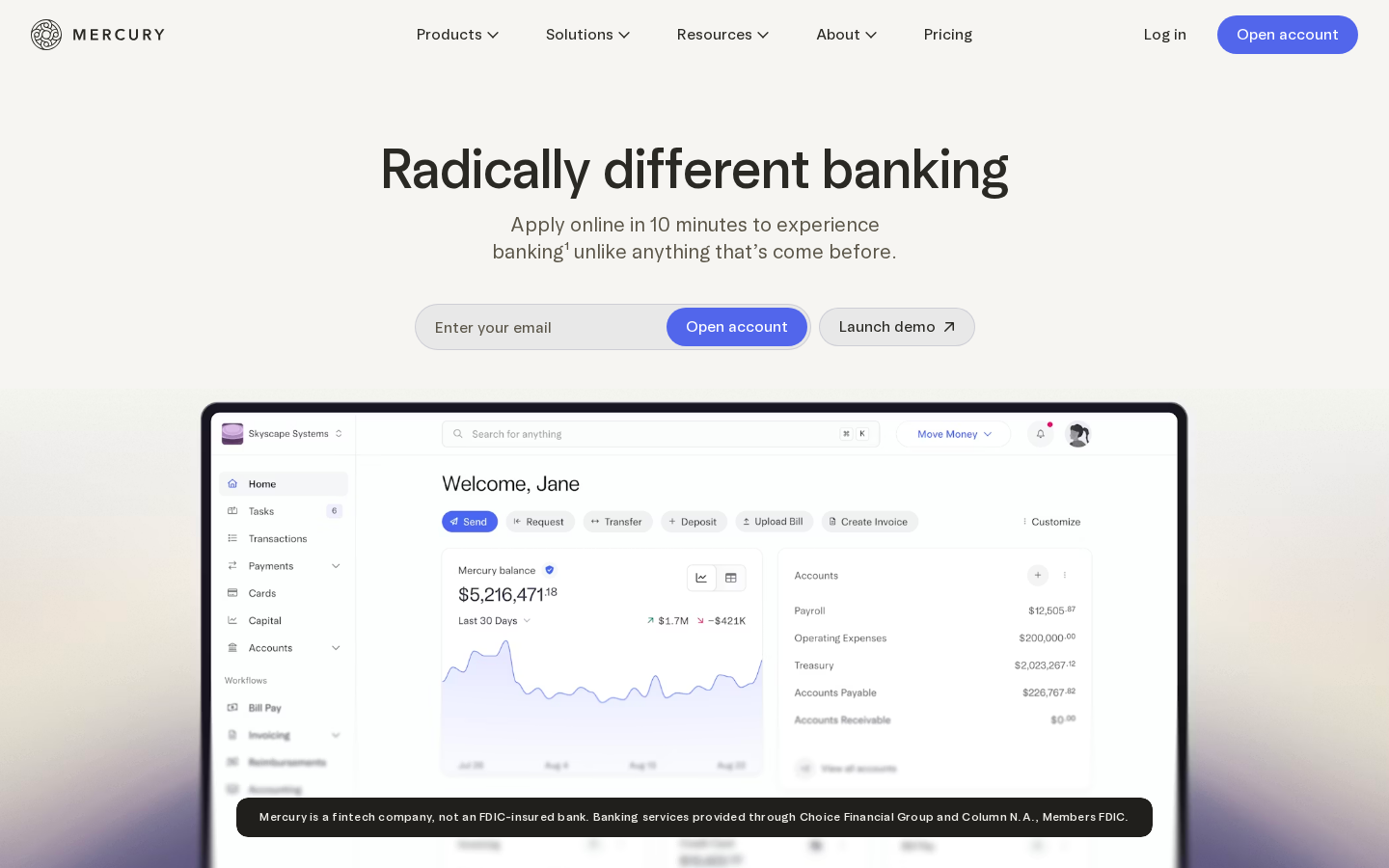
Best for: Tech startups and digital-first businesses that need API access and free international wires
Novo vs. Mercury: Mercury offers free domestic and international USD wire transfers, read-write API access for custom automations, and up to $5 million in FDIC coverage through its Vault sweep network, a set of tools that has no equivalent on Novo’s platform.
Mercury has become the default banking pick for startups, particularly in the Y Combinator ecosystem. It bundles free business checking and savings with a corporate credit card (the IO Mastercard), AI-powered bill pay, and a Treasury product that generates yield on balances over $250,000. For developers and finance teams, the open API is the real draw: it enables custom dashboards, bulk payment automation, and reconciliation workflows.
Mercury offers three plans: a free core plan, Mercury Plus at $35 per month, and Mercury Pro at $350 per month for businesses needing a dedicated relationship manager and advanced accounting integrations. The free plan covers the essentials for most early-stage companies. One notable limitation is that Mercury does not support cash deposits and does not serve sole proprietors; an EIN is required. Customer support is primarily email-based, which some users find frustrating when urgent issues arise.
Mercury’s Trustpilot reviews skew positive, with users highlighting the clean interface and fee-free wire transfers. The recurring gripe: check deposits can be slow, and communication during account reviews sometimes lags.
Key features:
- Free domestic and international USD wire transfers
- FDIC coverage up to $5 million through Mercury Vault sweep network
- Open read-write API for custom payment and reporting automations
Pricing: Free (core); Mercury Plus $35/month; Mercury Pro $350/month
3. Relay
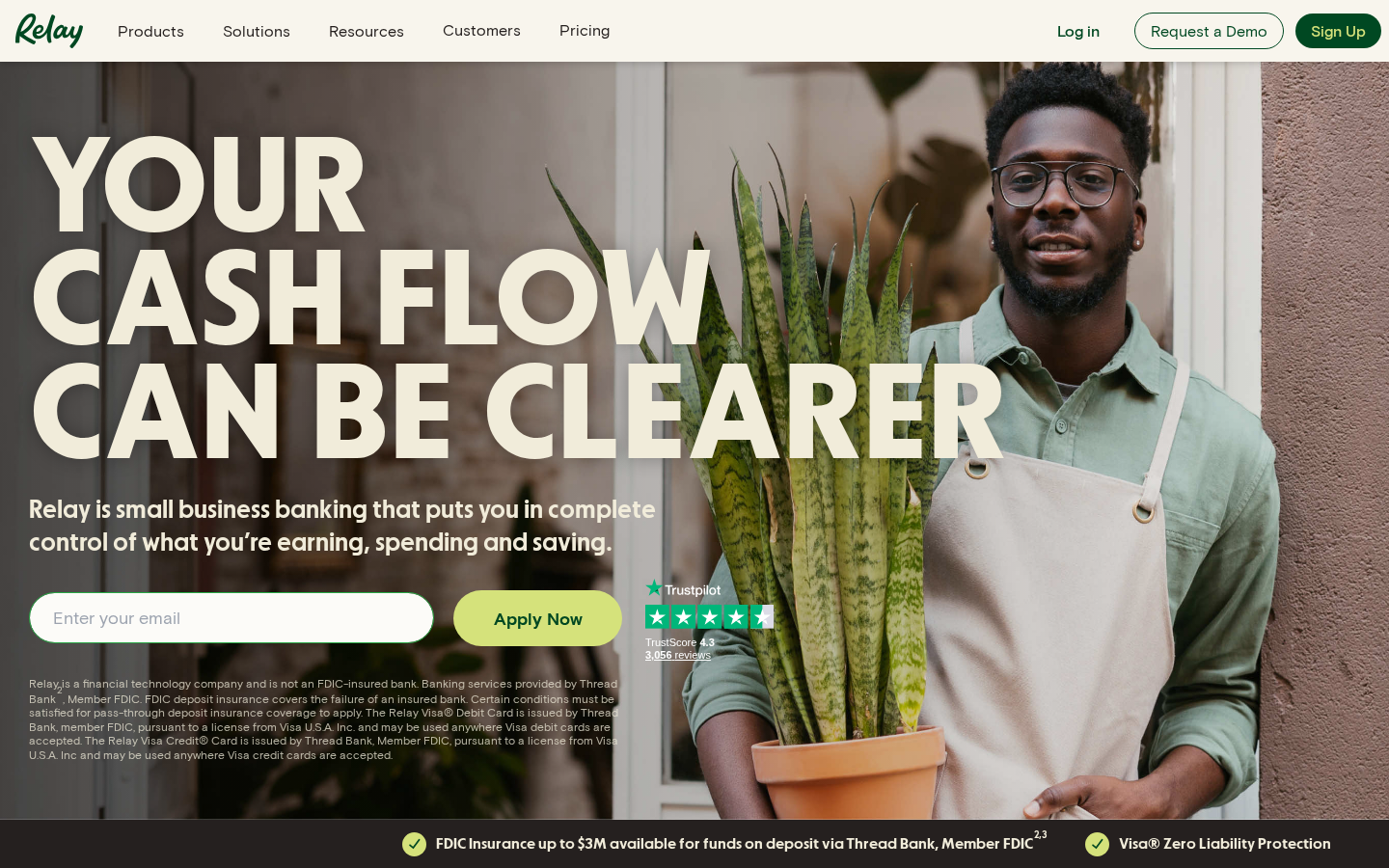
Best for: Small businesses using Profit First or envelope-style cash management
Novo vs. Relay: Relay lets you open up to 20 separate checking accounts (50 on the Scale plan), each with its own account number, compared to Novo's Reserves, which share a single account number.
Relay’s whole pitch is organized cash flow through multiple dedicated checking accounts. Inspired by the Profit First methodology, Relay allows you to separate funds for taxes, payroll, operating expenses, and profit into distinct accounts, each with its own debit card if needed. The platform also supports up to 50 Visa debit cards per business and offers role-based access controls for team members and bookkeepers.
Relay now offers three plans: a free Starter plan, a Grow plan at $30 per month, and a Scale plan at $90 per month (introductory pricing). Savings account APY varies by plan, from 0.97% (Starter) to 2.68% (Scale). FDIC insurance is available up to $3 million through Thread Bank via a sweep program. One limitation is that checking accounts do not earn interest directly; yield is only available through savings accounts. Relay does not offer lending products.
Relay holds a 4.4-star Trustpilot rating. Reviewers consistently point to the multi-account structure and clean interface as standouts; the most frequent downsides mentioned are limited integrations outside QuickBooks and Xero, and bill pay being locked behind a paid plan.
Key features:
- Up to 20 checking accounts with individual account numbers (50 on Scale)
- Up to 2.68% APY on savings (Scale plan)
- FDIC insurance up to $3 million via Thread Bank sweep program
Pricing: Free (Starter); Grow $30/month; Scale $90/month
4. Lili
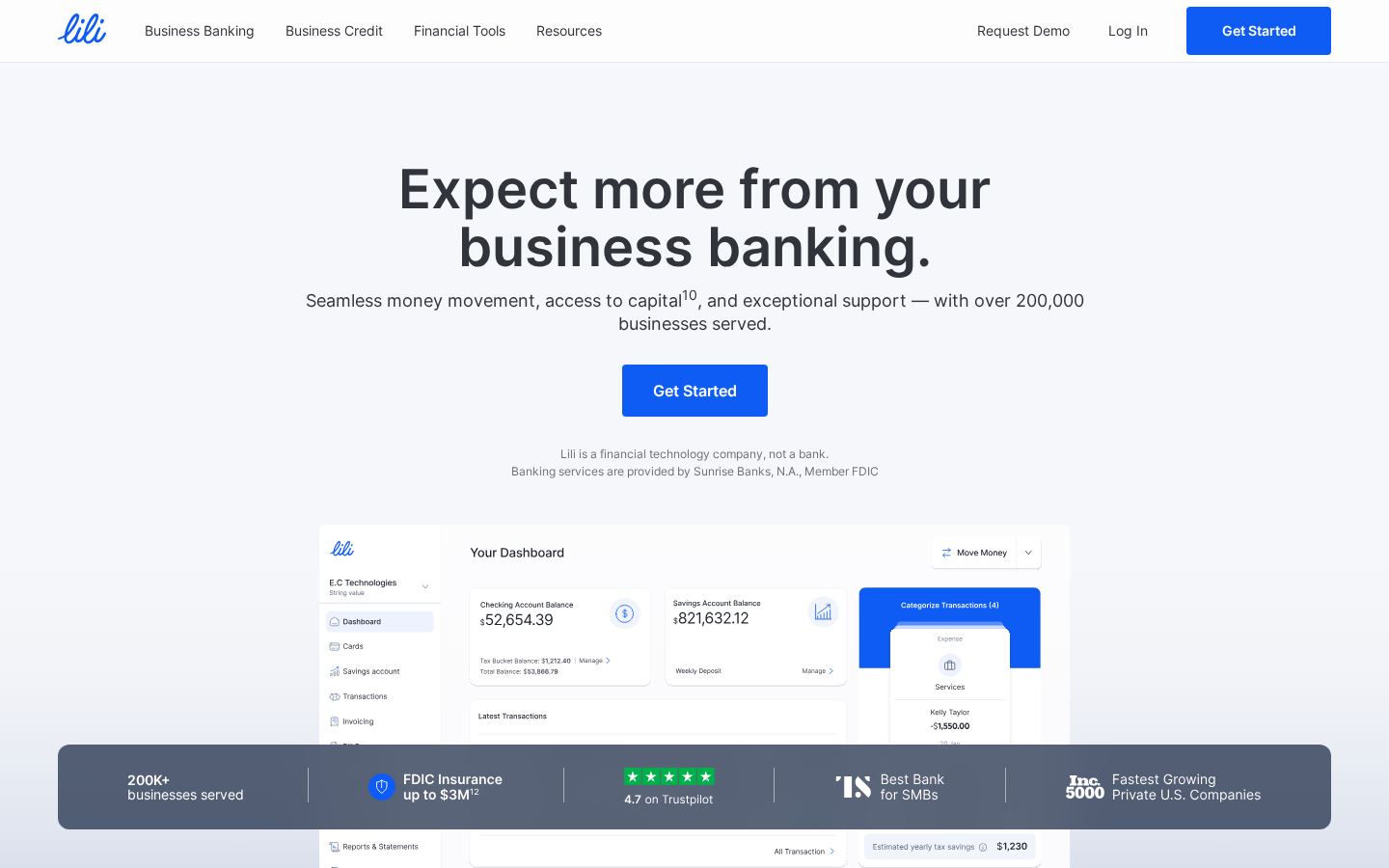
Best for: Small and mid-sized businesses that want banking, bookkeeping, and tax tools in one platform
Novo vs. Lili: Lili offers up to 4.00% APY on savings (on balances over $500,000), built-in accounting and tax preparation tools, and FDIC coverage up to $3 million, filling gaps that Novo leaves open.
Lili started as a freelancer-focused app but has since grown into a broader financial platform for small and mid-sized businesses with up to 20 people. Beyond free business checking on its Core plan, Lili layers in bookkeeping, expense categorization, tax estimation, and invoicing on its paid tiers. There’s also a savings account with a solid yield: 2.50% APY on balances up to $500,000 and 4.00% APY on balances above that threshold up to $1 million.
Lili offers four plans: Core (free), Pro ($15/month), Smart ($35/month), and Premium ($55/month). The Pro plan and above include early payment access (up to two days faster on select ACH deposits) and overdraft protection up to $200 through the BalanceUp program. Lili supports cash deposits through the Green Dot network, though fees and limits apply. One trade-off is that the accounting and invoicing features are only available on Smart and Premium plans, which adds cost for businesses that need those tools.
Lili’s Trustpilot reviews reflect a user base that values having banking and tax prep under one roof. Where reviewers push back is on transfer limits and check deposit timelines, which can feel tight for higher-volume businesses.
Key features:
- Up to 4.00% APY on savings (balances over $500K)
- Built-in tax estimation, expense categorization, and invoicing
- FDIC insurance up to $3 million via Sunrise Banks sweep program
Pricing: Free (Core); Pro $15/month; Smart $35/month; Premium $55/month
5. Found
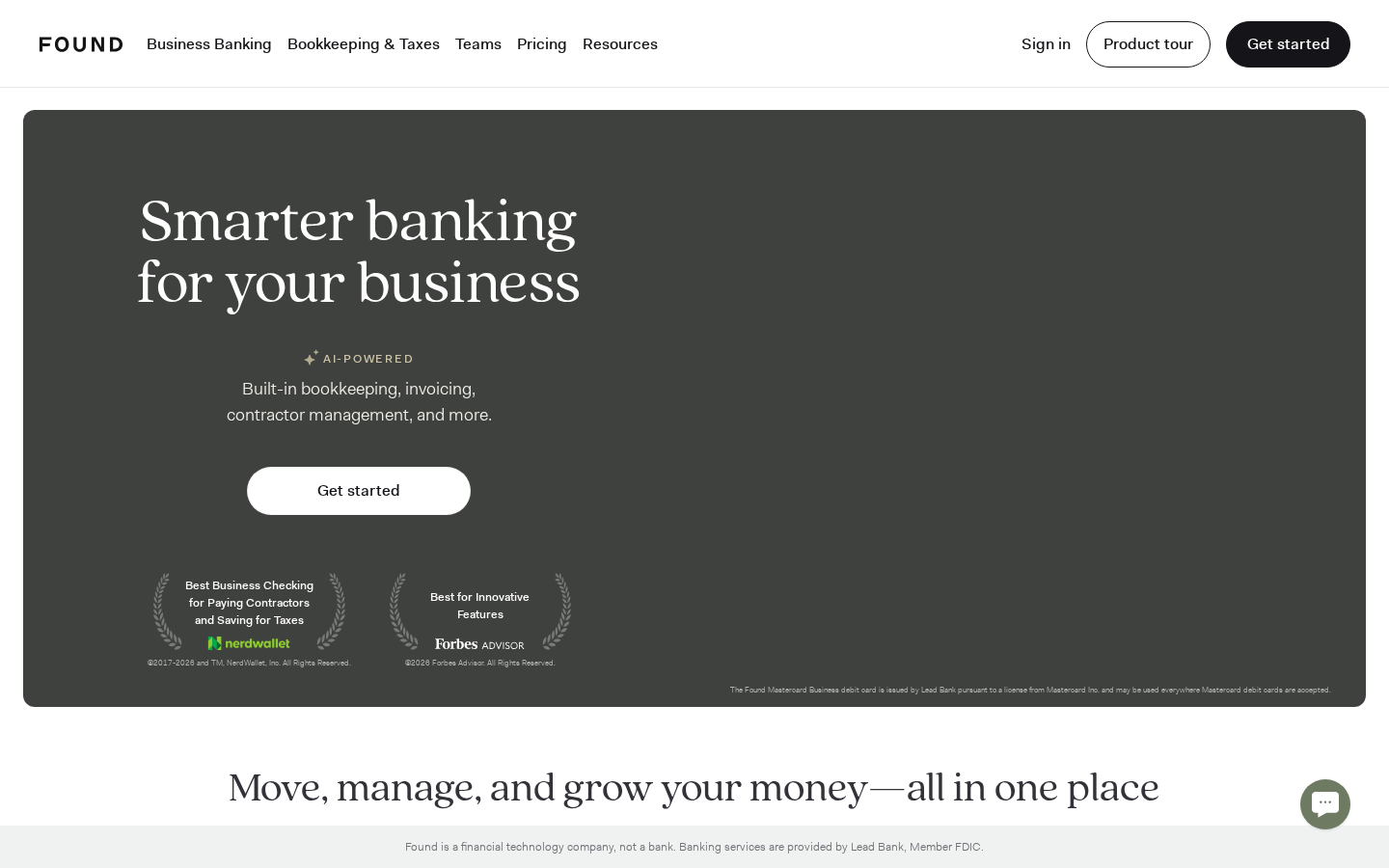
Best for: Self-employed professionals and gig workers who need automated tax savings
Novo vs. Found: Found automatically sets aside estimated taxes from every deposit, handles contractor payments (including W-9 collection and 1099 filing), and bundles in free bookkeeping, a tax-focused toolkit you won’t find on Novo.
Found is built specifically for the self-employed. It pairs a free business checking account with automated expense categorization, real-time tax calculation, and the ability to set aside a percentage of each deposit for estimated quarterly taxes, the kind of automation that can save freelancers from a painful surprise in April. Found also handles contractor payments end-to-end, from W-9 collection through 1099-NEC filing, without per-contractor fees.
Found offers a free plan with core banking and bookkeeping features, a Plus plan at $35 per month (1.5% APY on balances up to $20,000), and a Pro plan at $80 per month (2.5% APY on all balances with 1% cash back). One limitation is that the free plan earns no interest, and even the paid plans have a relatively low APY cap of $20,000 on the Plus tier. Found does not support partnerships or nonprofits, and it does not offer lending products.
Reviewers tend to praise Found’s tax automation and expense tracking above all else. The knock against it: interest-earning potential trails competitors, and the paid plans can feel steep for freelancers watching every dollar.
Key features:
- Automatic tax set-asides and real-time tax estimation
- Built-in contractor payments with W-9 and 1099 management
- Free expense categorization and bookkeeping
Pricing: Free (core); Found Plus $35/month; Found Pro $80/month
6. Brex
Best for: Venture-backed startups that need corporate cards and unified spend management
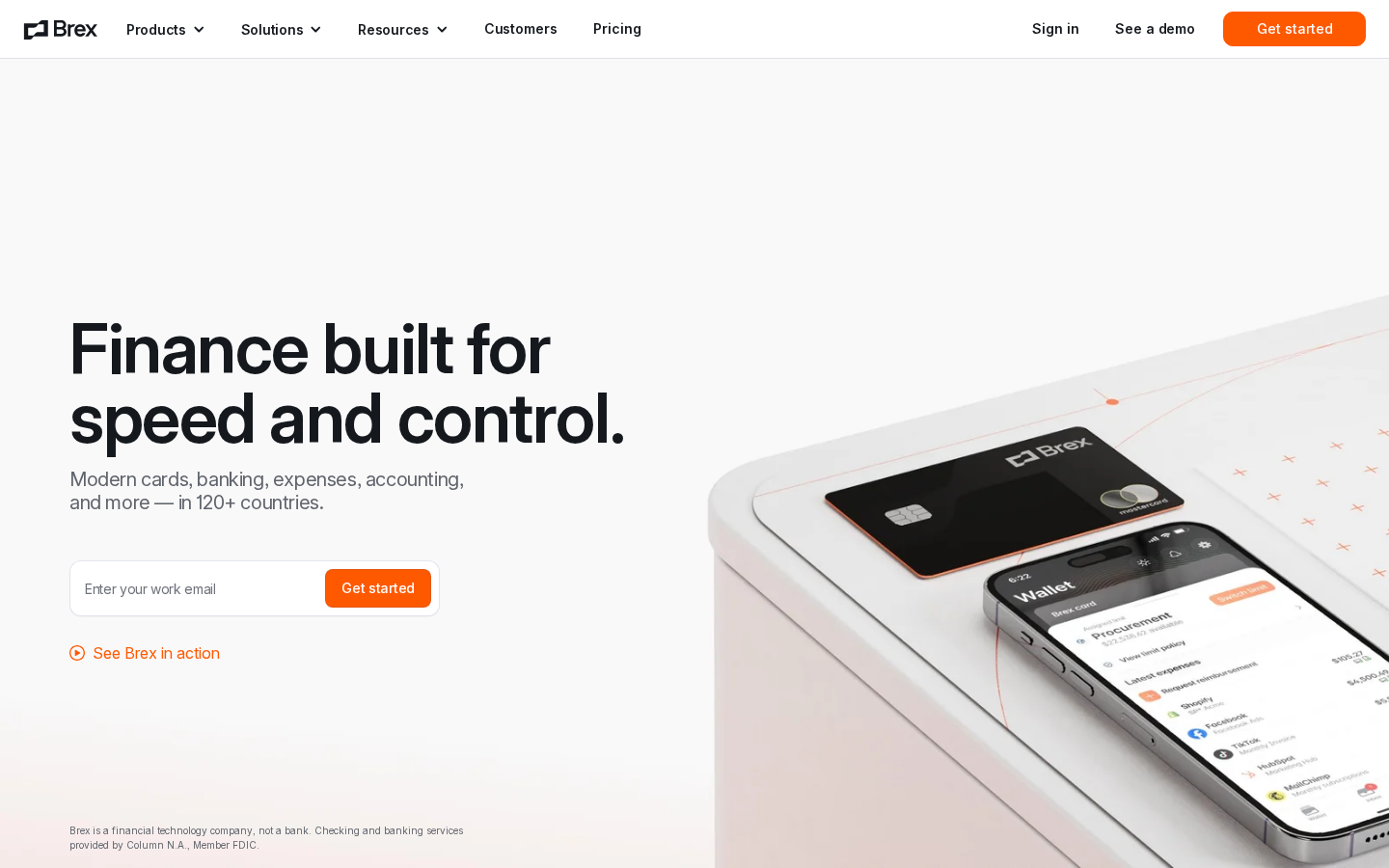
Novo vs. Brex: Brex offers corporate credit cards with no personal guarantee (underwritten based on company financials), AI-powered expense management, and yield on idle cash through Brex Treasury, a spend-management stack that operates in a different league from Novo.
Brex is a spend management platform designed primarily for funded startups and growing companies. The platform unifies corporate cards, expense tracking, bill pay, reimbursements, and travel booking into a single system. Credit limits are determined by the company's cash balance and revenue rather than personal credit scores, which makes it accessible to newer companies with strong funding but limited credit history. The Brex Essentials plan is free; the Premium plan costs $12 per user per month and adds dynamic approval chains, live budgets, and custom integrations.
Brex is not a traditional banking platform. While it offers a business account for holding funds, the feature set is more focused on spend control than everyday banking. Sole proprietors and very small businesses typically do not meet the eligibility requirements, which generally favor venture-backed or revenue-generating companies. G2 reviewers give Brex high marks for streamlined expense reporting and card management, though rewards devaluation and limited support access come up as recurring frustrations.
Key features:
- Corporate cards with no personal guarantee, based on company financials
- AI-powered expense categorization and policy enforcement
- Treasury product for earning yield on idle cash
Pricing: Free (Essentials); Premium $12/user/month; Enterprise custom pricing
7. Rho
Best for: Growing companies that need an integrated banking and spend management platform with dedicated support
Novo vs. Rho: Rho bundles free same-day ACH and wire transfers, multi-level expense approval workflows, up to $75 million in FDIC-insured savings, and 24/7 human support into a single platform, a level of operational infrastructure Novo wasn’t built to deliver.
Rho takes the opposite approach from Novo: instead of keeping things simple for solopreneurs, it bundles banking, cards, expense management, and AP automation into a single platform aimed at startups and mid-market companies. Unlike many competitors that gate features behind tiered pricing, Rho includes all core features, including banking, cards, expense management, bill pay automation, and accounting integrations, at no additional monthly cost. The company earns revenue through treasury management fees and interchange. The Rho corporate card offers 1.25% cash back (or 2% with the Platinum card for customers who combine banking and cards).
The Rho standout differentiator is its customer support: the company provides dedicated banking specialists and 24/7 human assistance, which is uncommon in the fintech space. The platform does not support sole proprietorships or unincorporated businesses, and it does not accept cash deposits. The Rho G2 profile reflects this emphasis on service. Reviewers regularly highlight fast onboarding and the all-in-one platform experience, though a few note that the QuickBooks bank feed integration could be smoother.
Key features:
- Free same-day ACH transfers and domestic/international wires
- Up to $75 million in FDIC-insured savings via sweep network
- 24/7 dedicated customer support with named banking specialists
Pricing: Free for all core banking, card, and expense management features. Treasury management fees apply (0.60% on first $2M).
8. NorthOne

Best for: Local businesses and e-commerce sellers who want interest-earning checking with cash deposit access
Novo vs. NorthOne: NorthOne offers up to 3.0% APY on checking balances (Plus plan) and accepts cash deposits at Green Dot retail locations, two things Novo simply doesn’t do.
Like Novo, NorthOne appeals to small business owners who want simplicity, but it adds interest and cash deposits to the mix. The platform targets contractors, restaurants, retail shops, and e-commerce sellers who need instant deposits from Shopify, Stripe, and Amazon. NorthOne pairs a business checking account with a competitive APY (2.50% on the Standard plan, 3.0% on Plus with minimum $500 monthly card spend), envelope-style budgeting sub-accounts, and automated bill pay, plus direct integrations with QuickBooks, Xero, and major e-commerce platforms.
Cash deposit access through the Green Dot network is a meaningful differentiator for businesses that handle physical currency, though a $4.95 per-transaction fee applies. The Standard plan is free; the Plus plan is available for businesses that meet spending requirements. NorthOne is FDIC-insured up to $250,000 through The Bancorp Bank, N.A., which is notably lower than the multi-million-dollar coverage offered by several other platforms on this list. It does not offer lending products directly, though it partners with Kanmon for lines of credit up to $250,000.
NorthOne’s mobile app and Envelopes budgeting feature get the most love in user reviews. The trade-off that comes up most often: a standard $250,000 FDIC limit, which may give pause to businesses carrying larger balances.
Key features:
- Up to 3.0% APY on checking balances (Plus plan, with card spend requirement)
- Cash deposits at Green Dot retail locations
- Envelope-style sub-accounts for budgeting and fund allocation
Pricing: Free (Standard plan with 2.50% APY); Plus plan available with $500/month minimum card spend for 3.0% APY
9. Grasshopper
Best for: Digital-native businesses wanting a high-yield checking account with personal banker access
Novo vs. Grasshopper: Grasshopper pays interest on business checking balances and pairs every account with a dedicated banker, two perks Novo doesn’t offer.
Grasshopper is an actual digital bank (not a fintech), and it leans into that distinction. The core offering is a business checking account with competitive yield, cash back on debit card purchases, and a dedicated banker assigned to your account, a combination that suits business owners who want an online-first experience without giving up a human point of contact. Grasshopper also includes digital invoicing, automated bookkeeping, and cash flow management tools.
As a digital bank, Grasshopper does not have physical branches, and cash deposit options are limited. The platform is best suited for service-based businesses, consultants, and digital-first operators who do not handle physical currency regularly. Grasshopper’s checking account has no monthly fee, no minimum balance, and no overdraft fees. Reviewers appreciate the personal touch of a dedicated banker and the yield on checking, though the overall feature set is narrower than what you’ll find at larger fintech competitors.
Key features:
- Interest-bearing business checking with no monthly fee
- Cash back rewards on debit card purchases
- Dedicated banker support for account management
Pricing: Free (no monthly fee or minimum balance)
How to find the best banking platform for your small business
Nine platforms is a lot to sort through. These five categories can help you narrow the field:
- Accessibility and convenience. Consider whether you need cash deposit access, a strong mobile app, or specific support channels. For example, Bluevine offers cash deposits at over 90,000 locations4, while platforms like Rho and Mercury are entirely cash-free. Think about how you and your team interact with your bank on a daily basis.
- Financial tools and integrations. Match the platform's tools to your actual workflow. If you run an e-commerce business, look for direct integrations with Shopify, Stripe, or Amazon. If you manage contractors, look for built-in 1099 management. If you manage cash flow across multiple categories, sub-accounts or multi-account structures can simplify your finances.
- Interest rates and lending access. If your business keeps meaningful balances in checking, a competitive APY can generate real returns. Also consider whether you might need access to a line of credit or term loan. Platforms like Bluevine offer both high-yield checking and lending products, while others focus solely on banking.
- Pricing and fee transparency. Look beyond the headline monthly fee. Evaluate per-transaction costs (wire fees, ACH fees, cash deposit fees), fee waiver conditions, and whether essential features like bill pay and invoicing are included for free or gated behind a paid tier.
- Security and FDIC coverage. For businesses that maintain substantial balances, the level of FDIC insurance coverage matters. Some platforms offer standard $250,000 coverage, while others, like Bluevine, provide FDIC insurance up to $3 million2 through partner bank networks. Consider how much to keep in your business checking account and ensure your platform covers it.
Your business deserves a banking partner that grows with you
If your banking app is just a place to park cash between invoices, that idle balance is costing you. Zero-interest checking, no lending options, and no cash deposit access add up over time. If Novo no longer fits where your business is headed, the alternatives on this list are worth a closer look.
Bluevine combines high-yield checking (up to 3.0% APY1), cash deposit access at over 90,000 locations4, integrated invoicing and payments, and access to apply for a line of credit, all in a platform built for small businesses of every structure. Open a Bluevine Business Checking account today and put your business banking to work.


FAQs
answer



Disclaimers
This content is for educational purposes only and should not be construed as professional advice of any type, such as financial, legal, tax, or accounting advice. This content does not necessarily state or reflect the views of Bluevine or its partners. Please consult with an expert if you need specific advice for your business. For information about Bluevine products and services, please visit the Bluevine FAQ page.
‡ The national average and comparison are based on interest rates paid by U.S. depository institutions as calculated by the FDIC.
◊ Applications are subject to credit approval. Rates and terms may vary based on your creditworthiness and are subject to change. Eligibility for the maximum funding amount is available only to applicants with the strongest credit profiles. Offerings and eligibility requirements vary by partner.
1. Bluevine Premier customers will earn 3.0% annual percentage yield ("APY") on total Bluevine Business Checking balances. Any interest accrued and payable for an account or sub-account will be paid to your main account. Enrollment in Bluevine Premier is not required to receive increased FDIC insurance coverage. Customers automatically receive increased FDIC coverage unless they have opted out of the Bluevine Business Checking Account Agreement Sweep Program.
2. Bluevine accounts are FDIC insured up to $3,000,000 per depositor through Coastal Community Bank, Member FDIC and our program banks. $3,000,000 in FDIC insurance is offered by multiplying the standard $250,000 FDIC coverage across multiple banks.
3. Applications are subject to credit approval. Rates, credit lines, and terms may vary based on your creditworthiness and are subject to change. Eligibility for the lowest rates is available only to applicants with the strongest credit profiles. Factors include FICO score, time in business, monthly revenue, and payment history. Additional fees apply. Bluevine Flex Line of Credit is issued by Celtic Bank, a Utah-chartered Industrial Bank, Member FDIC.
4. A $4.95 per transaction fee is applicable when depositing funds at Green Dot® locations. A fee of $1.00 plus 0.5% of your total deposit amount applies when depositing funds at Allpoint+ ATMs.
5. Premier and Plus plan customers automatically earn annual percentage yield ("APY") on their available balances. Standard plan customers will earn interest on their available balances if they meet an eligibility requirement as detailed in the Terms of Interest Accrual which is incorporated as a part of the Bluevine Business Checking Account Agreement. Bluevine Premier is subject to a $95 monthly fee. Bluevine Plus is subject to a $30 monthly fee.
6. Payment processing services are provided by Stripe, Inc., N.A. Bluevine Inc. Payment processing services are available to most businesses, subject to eligibility determined by Bluevine.
7. Draw requests are subject to review and approval. Bluevine Line of Credit customers can access approved draws instantly only with their Bluevine Business Checking account. Approved draws being deposited to an external bank account will be available in as quickly as a few hours if you choose our bank wire option ($15). Or, choose our fee-free ACH transfer option which typically gets funds deposited the next business day, although it may take up to three. Bluevine Flex Line of Credit is issued by Celtic Bank, a Utah-chartered Industrial Bank, Member FDIC.
8. Ratings as of March 2026.
9. Bluevine Plus is subject to a $30 monthly fee. Avoid the fee by doing the following each billing period: 1) maintain an average daily balance of at least $20,000 in your Bluevine Business Checking account and/or sub-account(s) and 2) spend at least $2,000 with your Bluevine Business Debit Mastercard® or Bluevine Business Cashback Mastercard®.
10. Bluevine Premier is subject to a $95 monthly fee. Avoid the fee by doing the following each billing period: 1) maintain an average daily balance of at least $100,000 in your Bluevine Business Checking account and/or sub-account(s) and 2) spend at least $5,000 with your Bluevine Business Debit Mastercard® or Bluevine Business Cashback Mastercard®.
Bluevine is a financial technology company, not a bank. Banking Services provided by Coastal Community Bank, Member FDIC. FDIC insurance only covers the failure of an FDIC-insured bank. FDIC insurance is available through pass-through insurance at Coastal Community Bank, Member FDIC, if certain conditions have been met. Bluevine accounts are FDIC insured up to $3,000,000 per depositor through Coastal Community Bank, Member FDIC and our program banks. The Bluevine Business Debit Mastercard® and Bluevine Business Cashback Mastercard® are issued by Coastal Community Bank, Member FDIC pursuant to a license from Mastercard International Incorporated and may be used everywhere Mastercard is accepted. Mastercard is a registered trademark and the circles design is a trademark of Mastercard International Incorporated.
Mastercard, Mastercard Easy Savings, Mastercard Airport Concierge, Priceless Surprises and the circles design are registered trademarks and Mastercard ID Theft Protection is a trademark of Mastercard International Incorporated.
Application is subject to approval. No monthly or maintenance fees. Card Replacement Fees and Wire Transfer Fees may apply.
Banking Services for payments made via ACH or wire from the Bluevine Business Checking Account are provided by Coastal Community Bank, Member FDIC. Money transmission services for International Payments are provided by a third party and are also subject to their applicable terms and conditions.
The Bluevine Line of Credit is issued by Celtic Bank and is serviced by Bluevine. Applications are subject to credit approval. Rates, credit lines, and terms may vary based on your creditworthiness and are subject to change. Additional fees apply. Other commercial credit products are offered by a variety of Bluevine’s third party partners. Bluevine is not involved in the issuance or servicing of these products. Offerings and eligibility requirements vary by partner.
Certain financing may be made or arranged pursuant to California Financing Law-License No. 6054789.
Payment processing services are provided by Stripe, Inc., N.A. Bluevine Inc. Payment processing services are available to most businesses, subject to eligibility determined by Bluevine.
Tap to Pay is only available on supported devices and may require upgrading to the latest version of the Bluevine app and your phone’s operating system. Some Android devices may not be compatible. Android is a trademark of Google LLC. Tap to Pay on iPhone requires a supported payment app. Some contactless cards may not be accepted by your payment app. Transaction limits may apply. The Contactless Symbol is a trademark owned by and used with permission of EMVCo, LLC. Tap to Pay on iPhone is not available in all markets. For Tap to Pay on iPhone countries and regions, see here.
All other product names, logos, brands, trademarks, and registered trademarks are property of their respective owners. All company, product, and service names used in this website are for identification purposes only. Use of these names, trademarks, and brands does not imply endorsement.
® 2026 Bluevine Inc. All Rights Reserved. “Bluevine” and the Bluevine logo are registered trademarks of Bluevine Inc.